In digital commerce, every interaction creates information.
Every click, search, scroll, and purchase reflects a pattern of behavior. Businesses today have access to more data than ever before, yet many struggle to convert that data into meaningful understanding.
Data alone does not create value. Insight creates value.
Understanding customer intent helps businesses create more relevant experiences, improve engagement, and make better strategic decisions.
When interpreted correctly, data reveals not only what customers are doing, but also why they are doing it.
What is Customer Intent?
Customer intent refers to the underlying motivation behind an action.
For example:
- When a customer searches for a product repeatedly, it indicates interest.
- When a customer compares multiple products, it shows evaluation.
- When a customer adds items to cart but delays purchase, it reflects hesitation or timing considerations.
- Intent represents the direction of customer decision-making.
- Understanding intent allows businesses to respond appropriately.
Difference Between Data and Insight
Many organizations collect large volumes of information but fail to derive meaningful interpretation.
Data represents activity.
Insight explains patterns.
For example:
- Data shows that a product page received many visits.
- Insight explains whether visitors were interested, confused, or comparing options.
- Insight helps businesses understand context.
- Without context, data remains incomplete.
- Insight-driven decisions improve effectiveness of marketing, design, and operations.
Behaviour Patterns in E-commerce
Digital commerce platforms continuously capture behavioural signals.
These signals help businesses understand customer preferences.
Common indicators include:
- Product search queries
- Browsing sequences
- Time spent on pages
- Repeat visits
- Cart activity
- Purchase frequency
Patterns reveal customer priorities.
Repeated actions indicate stronger intent.
Irregular patterns may indicate uncertainty or confusion.
Understanding behaviour patterns helps businesses improve user journeys.
Personalization Based on Customer Behaviour
Customers increasingly expect personalized experiences.
When platforms present relevant content, customers feel understood.
Examples of personalization include:
- Recommended products
- Recently viewed items
- Tailored content suggestions
- Relevant promotional offers
Personalization reduces effort required to discover suitable products.
Customers appreciate experiences aligned with their preferences.
Relevance improves engagement.
Engagement increases likelihood of purchase.
Predictive Understanding of Customer Needs
Advanced analytics enables predictive understanding of customer behaviour.
Patterns observed in historical data help anticipate future needs.
For example:
- Customers who purchase certain products may require complementary items later.
- Customers who browse specific categories may respond to related offers.
- Predictive understanding helps businesses prepare proactively.
- Preparation improves customer satisfaction.
Importance of Responsible Data Usage
While data provides valuable insight, responsible handling of information remains essential.
Customers value transparency and privacy.
Businesses must ensure:
- Secure data storage
- Ethical data usage
- Transparency in policies
- Respect for customer preferences
Trust remains fundamental to long-term customer relationships.
Insight should enhance experience, not compromise trust.
Data as a Tool for Continuous Improvement
Data helps businesses refine digital experiences continuously.
Insights enable improvements in:
- Website navigation
- Product presentation
- Pricing strategies
- Customer communication
- Operational efficiency
Continuous improvement strengthens competitiveness.
Organizations that observe patterns carefully make more informed decisions.
Learn More About BinaryIC
For more updates about ecommerce technology, integrations, and digital commerce systems, explore our BinaryIC insights and resources.
Click here to learn more about BinaryIC.
Final Thoughts
Understanding customer intent allows businesses to move beyond assumptions.
Insight-driven strategies create more meaningful customer experiences.
When data is interpreted with clarity, it reveals patterns that guide better decisions.
Observation is one of the most powerful tools available in digital environments.
Organizations that observe carefully respond more effectively.
Better understanding leads to better outcomes.
Explore a Deeper Perspective
Transformation often begins with awareness.
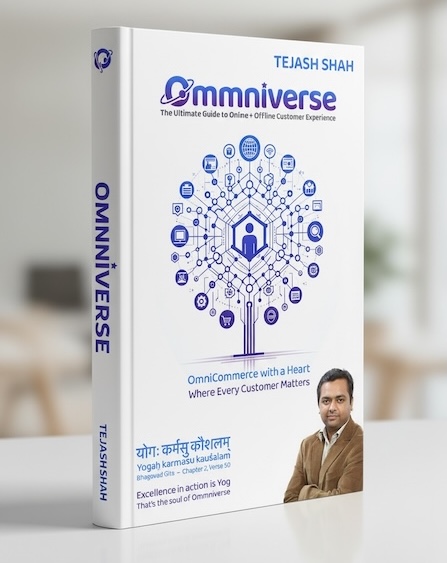
The book Ommniverse by Tejash Shah explores deeper questions related to perception, change, and the evolving nature of human understanding.
It invites readers to reflect on how awareness influences decisions and shapes reality.
Explore the book here:
https://ommniverse.tejash.me